

Lesson Structure Study sharpening teaching at LES
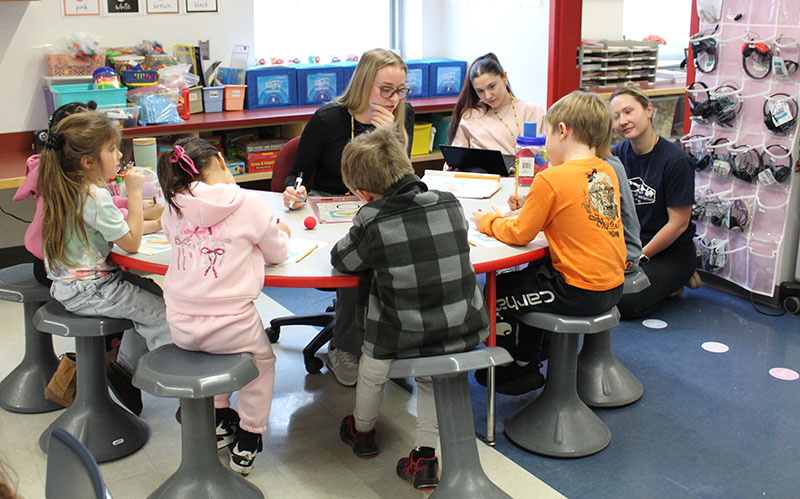
Liberty Elementary teachers are deepening collaboration and improving student learning through Lesson Structure Study.
LSS is a collaborative lesson building process created by Assistant Principal Paul Voigtland, piloted last year by the math department, that allows teachers to examine how lessons are taught and adjust them to better meet the needs of students.
“While there has always been a culture of collaboration in this building, this process is focused and intentional,” Mr. Voigtland said.
Identifying a need for change
At Liberty, math facilitators and administrators identified a valuable opportunity to evolve classroom dynamics from teacher-led instruction toward more hands-on, student-centered learning.
That is what led to the implementation of LSS.
“I wanted to help my grade level find a way to work through the curriculum in a meaningful and effective way,” said fourth-grade teacher Nicolina Shormis
A five-step process
LSS is modeled after an Action Research Iterative Cycle, which has five steps:
- Set goals
- Plan a lesson;
- Teach and observe the lesson while collecting data
- Debrief with discussion, revise and refine
- Reteach.
The focus isn’t on the materials of the lesson, but its structure, Mr. Voigtland said, which will ultimately give teachers strategies that can be repurposed to other topics or subjects.
The cycle is done three times. At the end of the third cycle, the teacher team will make any final changes and prepare to share their findings with their colleagues, through staff meeting presentations or classroom visits.
Shifting the focusing to students
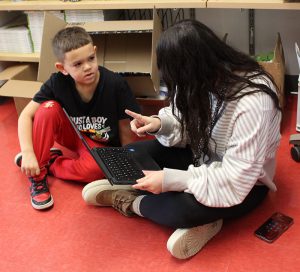 A feature of LSS is that observations center on the students, not the teachers.. Each observer is assigned one student to see how the student engages with the lesson then interviews the student to get feedback. Those observations and interviews guide revisions during the debrief.
“It gives me a better understanding of different aspects of the curriculum and I value the feedback from students to make changes based on the interviews,” said Math AIS teacher Analey Stratton.
Collaboration and empowerment
Collaborating as equals is key.
“When teachers meet to plan or debrief, one of the protocols is that they are all equals regardless of status or years of teaching” Mr. Voigtland said. “So even when there are administrators in the meeting or teachers who have been teaching for 20 years vs. one year, they all are on equal footing. This creates a safe space for collaboration and the best ideas to come forward.”
Much of the work is completed during common planning time and during Professional Learning Community meetings.
“If teachers are given the time, space, structure and latitude to collaborate they will come up with effective ways to enhance student achievement,” Mr. Voigtland said
A culture of trial, error and growth
LSS is a complement to traditional workshops and professional development days by creating a space to experiment. Sometimes ideas that teachers think will work on paper, don’t work in practice.
“It’s OK if it doesn’t work, but it will help us work it out in the end,” Math AIS teacher Alicia Houghtaling said.
“It gives us space to fail forward,” Mr. Voigtland added.
Expanding LSS at Liberty Elementary
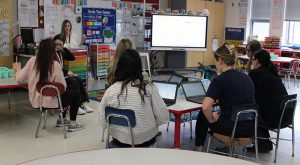 This year, LSS has expanded to three cohorts. While administration still helps facilitate, the long-term goal is for the process to be fully teacher-led and teacher-driven..
Teachers choose the topics they want to study because they know where improvement is most needed.
Echoing Habit 7 of the Leader in Me Program—“Sharpen the Saw”— Mr. Voigtland said LSS is helping teachers grow and take ownership of their professional learning
Students, too, feel more ownership.
“When students are given the opportunity, they are capable and able to be in charge of their own learning,” Math AIS teacher Jennifer Eisenberg said.
Early impact and teacher response
While LSS is still new at Liberty Elementary, teachers are already seeing a positive impact.
“Students are more engaged in the learning,” fourth-grade teacher Jenna Genco said. “They are more open to talk during the Spark your Learning section of math and help each other.”
Several teachers who are not in the cohorts have also implemented some of the practices discovered during LSS into their instruction.
“We are continuing to try to improve,” Mr. Voigtland said. “It’s only going to lead to improvement in the long run.”